D&H Canal Books
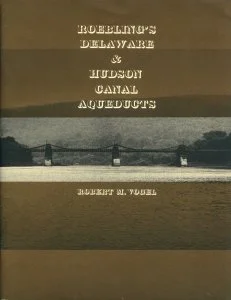
Smithsonian Studies in History and Technology - Number 10
Roebling's Delaware & Hudson Canal Aqueducts
by Robert M. Vogel
Publisher: Smithsonian Institution Press, City of Washington 1971, Reprinted by Eastern national Park and Monument Association, Philadelphia, PA 1984
Format: Softcover, 45 pages
"The nineteenth-century American civil engineer, John A. Roebling, is best remembered for his crowning work, Brooklyn Bridge, built to his design by his son, Washington, following the elder Roebling's death in 1869. Although an engineering monument of the highest order, Brooklyn Bridge must--if historical justice is to be done--share its notoriety with a small, relatively obscure suspension bridge that was Roebling's third work, and is his earliest still standing."
John Roebling built four suspension aqueducts for the Delaware and Hudson Canal Company as an improvement to the original canal design. His suspension aqueduct built just below the mouth of the Lackawaxen River bridges the Delaware River and is still in use today as a toll bridge as it is the only crossing of the Delaware River for 15 miles.
This book contains John Roeblings drawings for the bridge along with descriptions regarding the construction of the aqueduct. A extremely well built design considering that the bridge/aqueduct put into service in 1851 is still standing and providing service some 150+ years later!

Coal Boats to Tidewater
by Manville B. Wakefield
Publisher: Wakefair Press
The Delaware and Hudson Canal Skirted ghostly swamps, crossed stone arch bridges and suspension aqueducts, wound along the base of towering cliffs and clung to the edge of narrow defiles. It followed a route that challenged the engineering genius of its day. "Coal Boats to Tidewater" is a study in depth of regions clarified by more than thirty maps and over two hundred photographs.
This researching and penetrating, graphic an literary record, is not only of the great days of boating and gravity railroading, but of the gaunt skeletal remains of today. It documents the lock ruins and the present day canal-side structures for those who walk the towpaths of the future and like to search out the weed-grown folkways of the past.
This book is the definitive book on the canal from which our favorite railroad got its name. It includes many photographs as well as superb maps and illustrations by the author.
The Delaware and Hudson Canalway: Carrying Coals To Rondout
by Dorothy Hurlbut Sanderson

Publisher: Rondout Valley Publishing Company, 1974
From the Coalfields to the Hudson: A History of the Delaware and Hudson Canal
by Larry Lowenthal
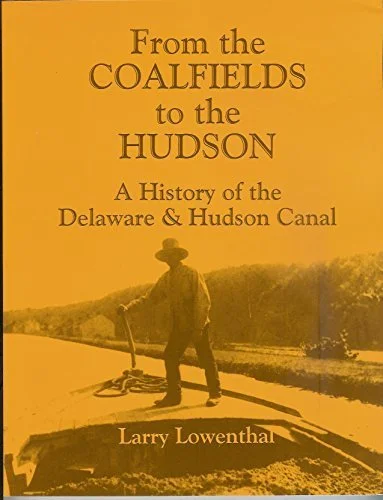
Publisher: Purple Mountain Press, Ltd., Fleischmanns, New York, 1997|
Format: 298 pages, Softcover
In photographs and paintings the Delaware & Hudson Canal appears calm and unrufffled. The charming picture is not entirely false, but there is another dimension to the D&H Company, a corporation struggling to succeed in a hostile and risky business. Except in its final years the history of the canal was marked by a series of crises or conflicts, each of which threatened the survival of the company. Constant insecurity wore out the D&H managers, but as the company met its challenges in the formative years of American capitalism, it created a model for later enterprises. Now, more than a century after the last boatload of anthracite floated down the D&H Canal, this book gives a new and fuller perspective on this remarkable venture.
First published in 1997, and long out of print, this second printing contains a 16-page supplement.
The Delaware and Hudson Canal and the Gravity Railroad
By Matthew M. Osterberg

Publisher: Arcadia Publishing SC, 1991
Format: 128 pages, Softcover
From the anthracite mines of Pennsylvania at Carbondale to the Hudson River in New York near Kingston, the Delaware & Hudson Canal Company and the Gravity Railroad transformed long tracks of wilderness into thriving economic areas. Conceived as an inexpensive way to transport anthracite coal, the canal began hauling loads in 1828 to the Hudson River, where barges to New York City took over. A leader in the technologies of the time, the canal company used the first telegraph system in America, and when Delaware & Hudson engineer Horatio Allen ran the locomotive Stourbridge Lion in Honesdale, he became the first to run a commercial steam locomotive on tracks in the Western Hemisphere. The Delaware & Hudson Canal was privately funded, and when stock was offered for sale in 1825, it soon became the first American company capitalized at $1 million. The Delaware & Hudson Canal and the Gravity Railroad uses fascinating vintage photographs to tell an amazing piece of American history. It shows the mules, the canal boats, the locomotives, and the men who ran this technological wonder, boasting one hundred eight locks over one hundred eight miles, plus four suspension aqueducts built by John A. Roebling of Brooklyn Bridge fame. The Gravity Railroad is shown as well, hauling coal from Carbondale to Honesdale over the Moosic Mountains, a rise of more than one thousand feet. The Delaware & Hudson Canal and the Gravity Railroad tells the story of an American industrial masterpiece.
The Delaware and Hudson Canal: A History
by Edwin LeRoy, Honesdale
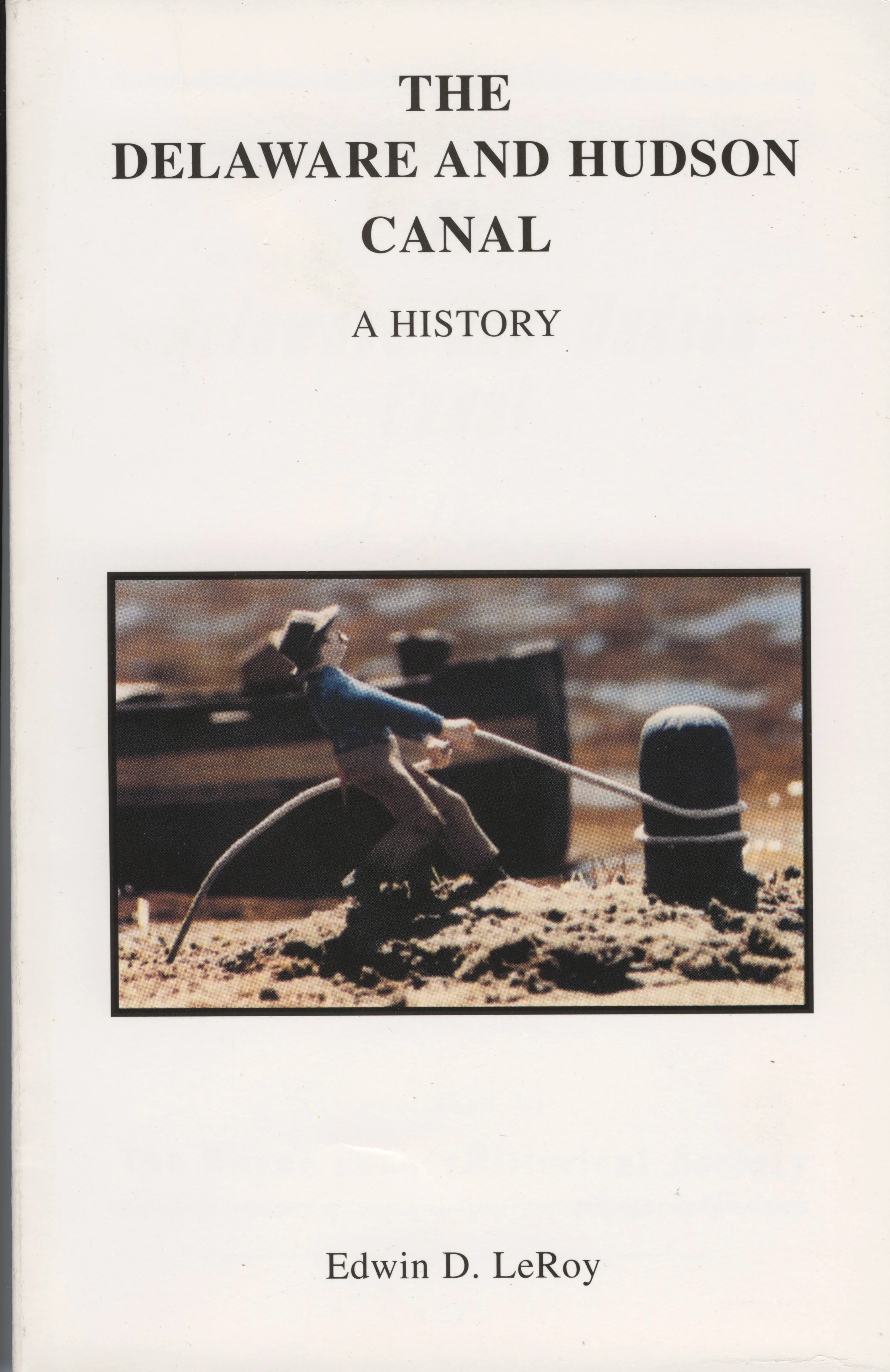
Publisher: Wayne County Historical Society, 1950
Format: 100 pages, Softcover
Eighth printing, now includes color photo on front, index and biography of author, many black & white photographs, maps, and line drawings by author. If you own one book on the D & H canal this is the one!
Honesdale and the Stourbridge Lions
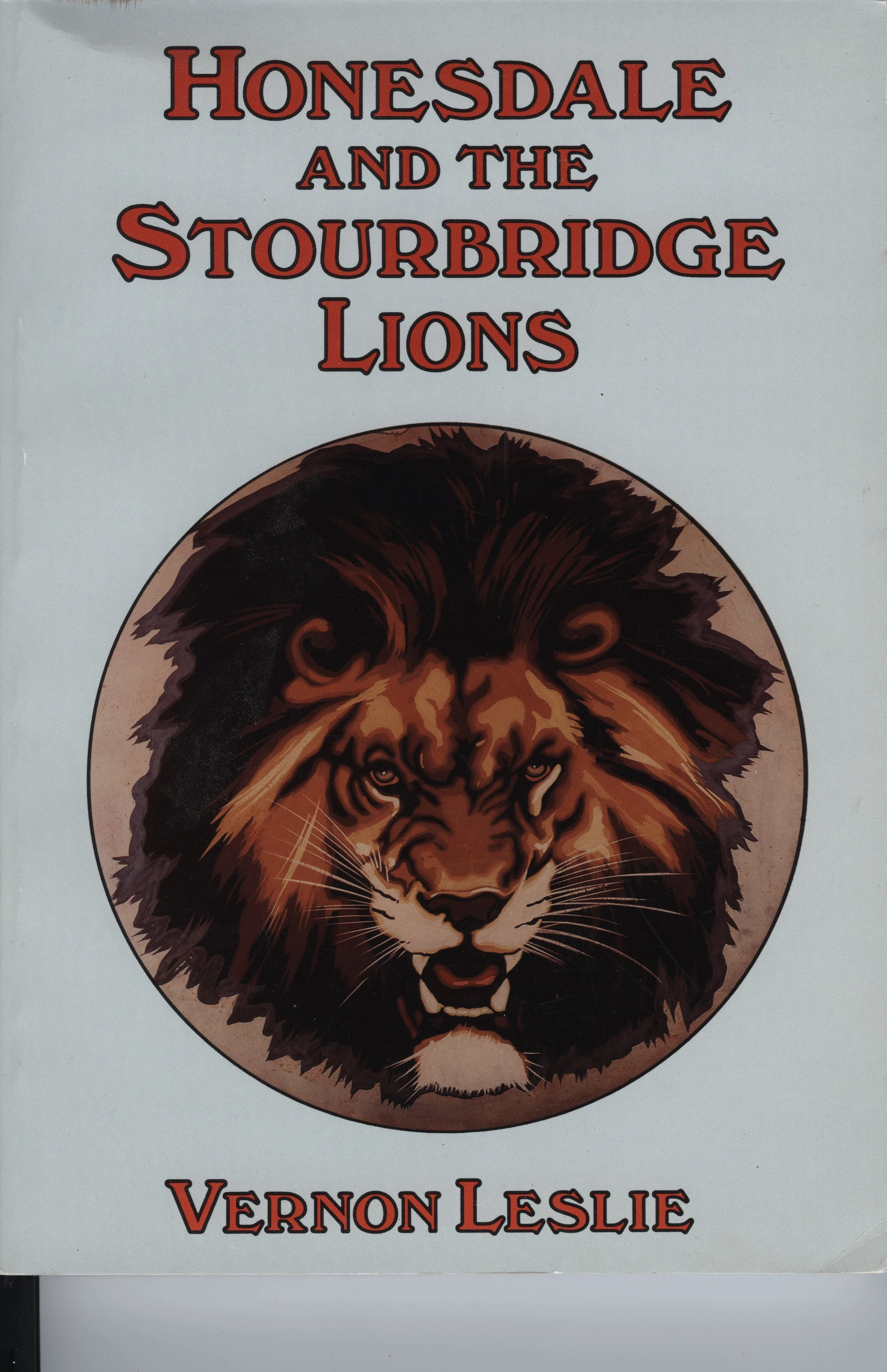
by Vernon Leslie
Publisher: The Stourbridge Lion Sesquicentennial Corporation, Honesdale, Pennsylvania, 1979, 78-68918.
Format: 163 pages, Softcover
Wayne County Historian. Part I of this book was originally published in 1979. It tells the story of the original locomotive made in Stourbridge, England, in 1829 and brought to Honesdale, Pa. by the D & H Canal Co. where it was the first locomotive to run on commercial track in American. Part II tells of the commemorative celebration in 1929, the building of the near exact replica of the first Lion in 1933, and its career afterwards. Excellent index. Available through the Wayne County Historical Society
Of Pulleys and Ropes and Gear: The Gravity Railroads of the Delaware and Hudson Canal Company and the PA Coal Company
By Philip Ruth
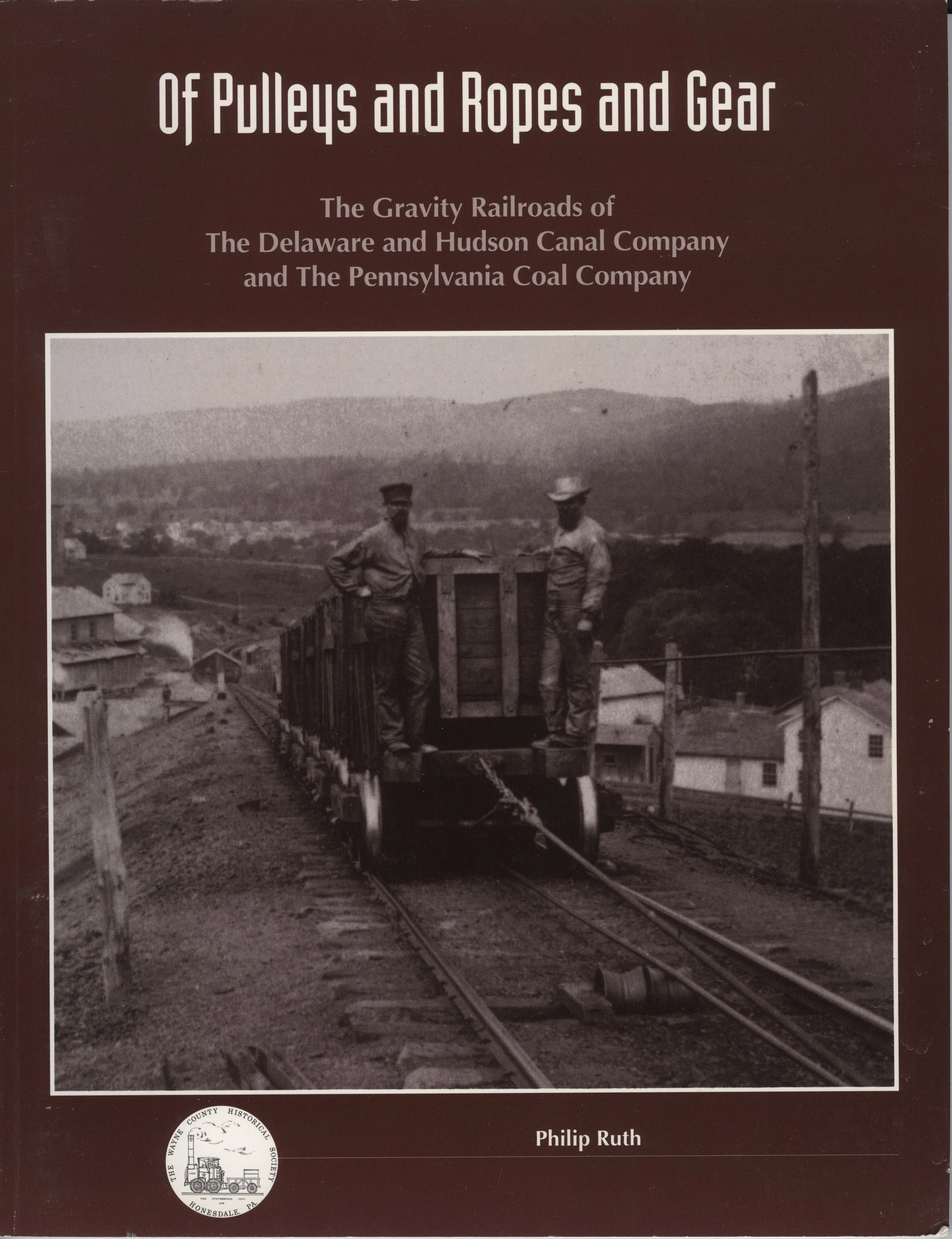
Publisher: Wayne County Historical Society, 1997
Format: 75 page Softcover
Contains many black & white photographs not previously published, 75 page paperback. The ONLY book on these two gravity railroads in print!